Aura Colors and Their Meanings
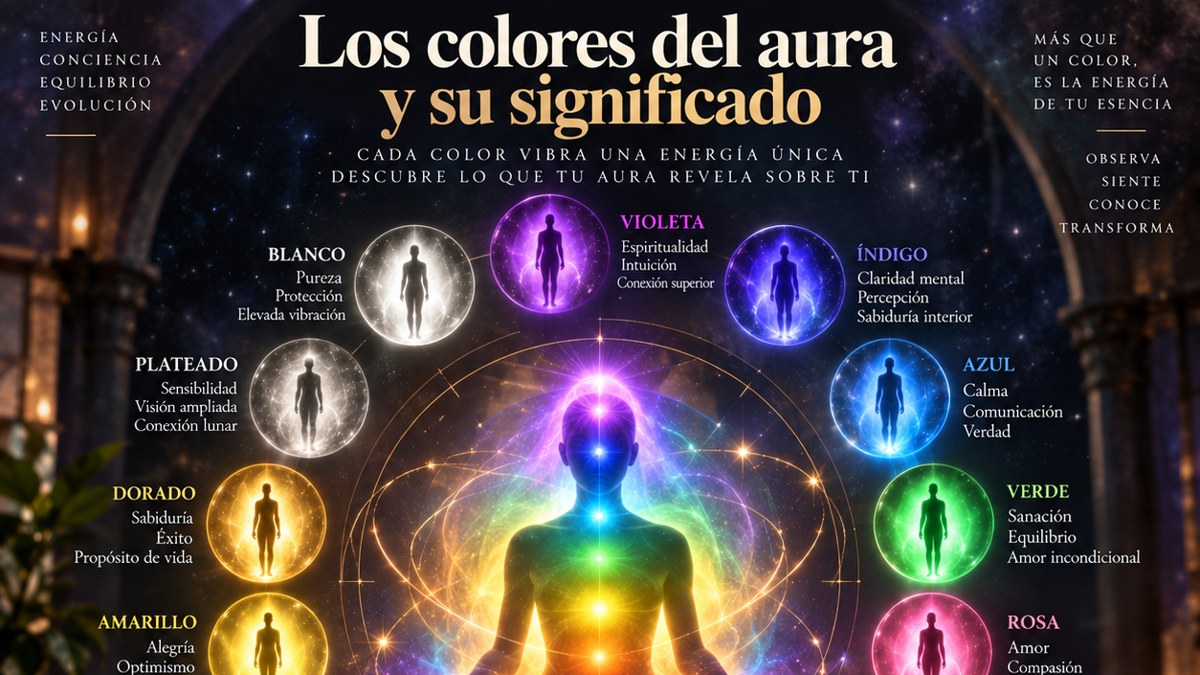
The aura is the subtle energy field that, according to various spiritual traditions, surrounds every living being. Its colors—and the intensity with which they are perceived—offer symbolic clues about a person's emotional, mental, and energetic state at a given moment.
Red, orange, and yellow: vital energy
Red is associated with vitality, passion, and a strong connection to the physical body; in its most intense form it can also signal anger or built-up stress. Orange reflects creativity and sociability. Yellow speaks of optimism, mental clarity, and a joyful, expansive energy.
Green and blue: balance and communication
Green represents balance, healing, and a strong connection with nature and personal growth. Blue is linked to calm, honest communication, and the ability to express what you think and feel clearly.
Violet, white, and other shades
Violet or indigo is usually associated with intuition and elevated spirituality. White represents energetic purity and a moment of transition or renewal. Darker or murkier shades of any color, on the other hand, are usually interpreted as stagnant energy or emotions that need to be processed consciously.
The aura changes constantly
Unlike a fixed personality trait, the color and intensity of the aura fluctuate depending on your emotional state, your health, and the circumstances you're going through. That's why many people describe "seeing" different colors in the same person at different times in their life — it's not contradictory, it's simply the reflection of an energy in constant motion.
The aura and the chakras: two connected systems
The aura doesn't exist in isolation: many traditions describe it as the visible result of the activity of the seven chakras, the energy centers aligned along the spine. A particularly active or blocked chakra tends to "tint" the aura with its associated color — for example, a very active heart chakra can intensify the green or pink in your overall aura, while a blocked root chakra can darken the red tones. That's why working directly with the chakras (through meditation, crystals, or breathwork) is one of the most direct ways to consciously influence the color of your aura.
Layers of the aura: it's not one field, it's several
Some traditions describe the aura not as a single layer of energy, but as a system of at least seven overlapping layers, each linked to a different aspect of the self: from the physical and emotional body closest to the skin, to outer layers associated with the mental, the spiritual, and the connection with the divine. The "dominant" color we perceive at first glance usually corresponds to the most active layer at that moment, which explains why the same person's aura can look so different from one day to the next.
Couple's aura: when two fields meet
One curious phenomenon described by those who practice aura perception is the temporary merging of auras between people who are very close — partners, family members, or intimate friends. During a long hug or a deeply connected conversation, both energy fields may briefly "blend," creating a feeling of warmth and closeness that many describe as having "synced energies" with the other person.

Aura colors one by one: light, shadow, and what to do
According to esoteric tradition, each color describes a form of energy and has a luminous side and a side that asks for attention. Use it as a mirror for self-knowledge, not as a diagnosis.
Red
Light: vitality, courage, passion. Shadow: irritability, impatience. Practice: physical movement and real rest.
Orange
Light: creativity, sociability, enthusiasm. Shadow: scatteredness, dependence on others' approval. Practice: pick one project and finish it.
Yellow
Light: optimism, quick mind, curiosity. Shadow: overanalyzing, perfectionism. Practice: write down ideas without judging them.
Green
Light: balance, care, connection with nature. Shadow: possessiveness, envy. Practice: time outdoors and healthy boundaries.
Blue
Light: calm, honest communication, trust. Shadow: keeping quiet about what you feel. Practice: tactfully say a truth you've been holding back.
Indigo
Light: deep intuition, vision. Shadow: isolation, hypersensitivity. Practice: brief meditation and a dream journal.
Violet
Light: spirituality, sensitivity, inspiration. Shadow: escaping from everyday life. Practice: ground your ideas in small actions.
Pink
Light: tenderness, compassion, self-love. Shadow: idealizing or people-pleasing too much. Practice: treating yourself with the same kindness you'd show a friend.
White and gold
Light: clarity, renewal, sense of purpose. Shadow: demanding impossible purity of yourself. Practice: appreciate what is already going well.
If you want to explore which color represents you, try the free aura test. It's a symbolic reading for entertainment: there is no scientific way to measure an aura.
Frequently asked questions
What does a red aura mean?
According to esoteric tradition, red is associated with vitality, passion, strength, and a connection to the physical. An intense red can indicate energy and determination; when overdone, some link it to anger or stress.
What do the orange aura and the yellow aura mean?
In esotericism, orange speaks of creativity, sociability, and a desire to enjoy life, and yellow of optimism, joy, and mental clarity. Both are linked to a luminous, expansive energy.
What does a green aura represent?
Green is interpreted as balance, healing, growth, and an open heart. People with a green aura are said to be empathetic and to seek harmony in their relationships. This is a symbolic interpretation, not an objective fact.
What do the pink, white, gray, and black auras mean?
According to tradition, pink symbolizes love and tenderness; white, purity or spiritual openness; gray, indecision or fatigue; and black, blockages or contained energy. They are symbols, not verdicts. If something truly worries you, seek professional support.
Is there a scientific basis for aura reading?
There is no scientific evidence that the aura exists as a visible or interpretable field of colors. It is an esoteric belief that some find useful as an exercise in introspection.
What did you think of this article? Tell us about your experience.
Thanks for your feedback!