Leonids 2026: Meteor Shower and Its Symbolic Meaning
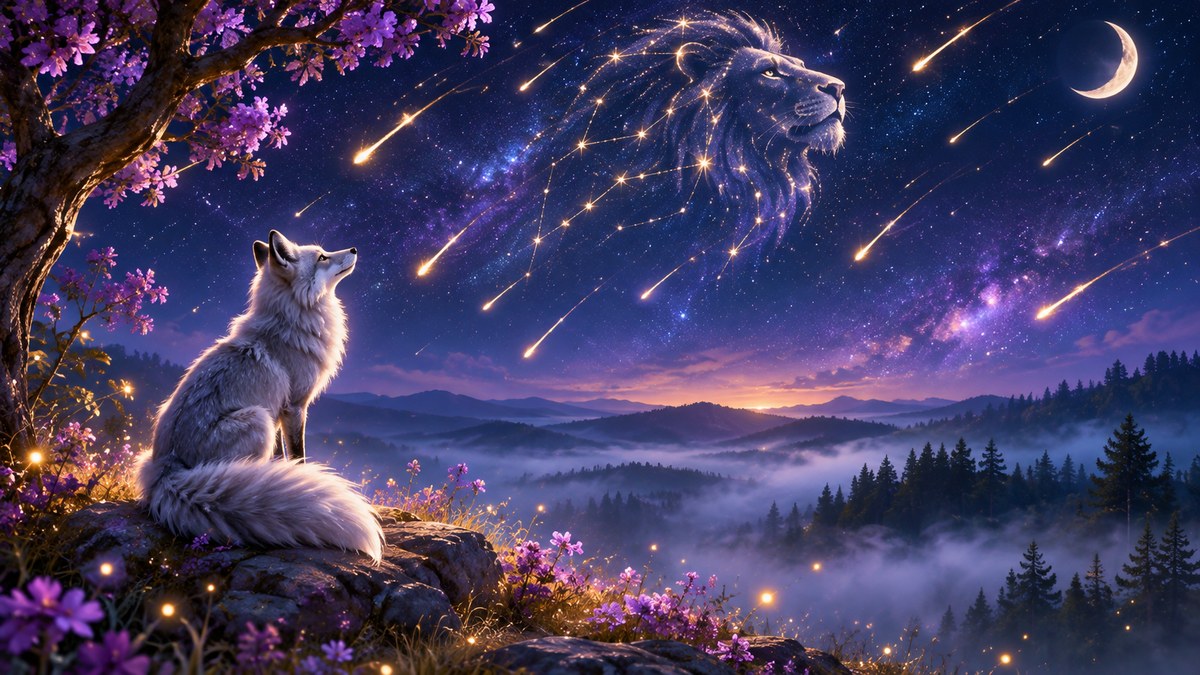
Every November, the night sky gives us one of the most beloved meteor showers on the calendar: the Leonids. In 2026 the peak arrives on the night of November 17 to 18, and you still have time to plan your date with the sky at an easy pace. Here's what to expect according to astronomical sources, what it looks like, and what this night means symbolically for those who enjoy the esoteric tradition.
What the Leonids Are and What to Expect in 2026
The Leonids are a meteor shower that occurs when Earth passes through the trail of dust left behind by comet 55P/Tempel-Tuttle. Those grains, about the size of sand, ignite as they enter the atmosphere and draw streaks of light. They get their name because they seem to come from a point in the constellation Leo, known as the radiant, near the star Algieba.
According to the sources consulted, the peak is expected on the night of November 17 to 18, 2026, with a rate of roughly 10 to 15 meteors per hour under ideal dark-sky conditions. In other words, normal activity, with no extraordinary show: specialists say no meteor storm is expected this year. It's worth being clear about that so you don't set false expectations: you'll see some shooting stars, not a cascade.
The shower is active for several weeks in November, so even if the sky is cloudy on the night of the peak, you can try on nearby nights and catch an occasional meteor, though less often.
The Moon and the Best Time to Look
This year the Moon will be near its first quarter, half illuminated, and will set around midnight. That works in your favor: the Leonids are best observed in the predawn hours, when the radiant in Leo has climbed higher in the sky, and by then the Moon will no longer get in the way. The usual recommendation is to head out late on the night of the 17th and stay until dawn on the 18th.
If you want to check the moon phase for any day, you can use our Moon Phase Today tool, and to see the whole month, the November 2026 moon calendar. Near the radiant, Jupiter and Mars also shine on those days, a detail that adds beauty to the view.
Practical Tips for Watching Them
- Get away from city lights. A dark park, the countryside, or a rooftop without streetlights makes a big difference.
- Give your eyes time. They need about 20 minutes to adjust to the dark; avoid looking at your phone.
- Bundle up. November predawn hours are cold; bring a blanket, a hot drink, and a reclining chair.
- Look at the whole sky. There's no need to aim at Leo: meteors appear in any part of the sky, and their trails stretch backward toward the radiant.
- Skip the telescope. Binoculars narrow your field of view; the naked eye is best.
The Symbolic Meaning of a Meteor Shower
In many traditions, a shooting star symbolizes a moment of wishing, a fleeting message, or the feeling that something in your life is moving. These readings belong to the symbolic and cultural realm, not to prediction: no one can guarantee that a wish will come true, but the ritual of making one does help put into words what you want.
The Leonids are named for the lion, and symbolically they are associated with the sign of Leo: heart, courage, inner radiance, and creativity. According to astrological tradition, Leo rules the center of the chest and personal expression, so this night invites you to ask yourself: What do I want to show with pride? What gives me courage? Where have I stopped shining out of fear of standing out?
November is also a month of transition, with autumn well underway in the Northern Hemisphere and the feeling that the year is coming to a close. Watching small lights fall in the darkness is interpreted as a metaphor: even in the longest night there are sparks of hope.
A Little Ritual for Leonids Night
If you like to accompany sky events with a symbolic gesture, here's a simple suggestion, designed as a practice for personal reflection and entertainment:
- Before heading out, write on a piece of paper three things you want to let go of from this year and three you want to cultivate.
- Once outside, take a few minutes to breathe deeply and watch the sky without looking for anything in particular.
- With each meteor you see, mentally repeat a brief intention, phrased in positive terms (“I want to cultivate calm” works better than “I don't want stress”).
- When you're done, put the paper in a drawer or notebook and read it again at the December solstice or at the end of the year.
You don't need candles or special objects; the real tool is attention. If you'd like to add a card to the moment, you can draw your Daily Tarot when you get home and see which symbol appears to close out the night.
How to Read the Night by Your Sign
As a symbolic game, you can associate the night with the elements. Fire signs (Aries, Leo, Sagittarius) may feel the night as a push to act and create. Earth signs (Taurus, Virgo, Capricorn) can use it to organize concrete plans. Air signs (Gemini, Libra, Aquarius) can take advantage of it to talk and share ideas, and water signs (Cancer, Scorpio, Pisces) to listen to their intuition and emotions. It's a playful reading, not a rule.
Frequently asked questions
When is the peak of the 2026 Leonids?
According to astronomical sources, on the night of November 17 to 18, 2026. The exact time depends on your time zone; the best bet is to look in the predawn hours.
How many shooting stars can you see?
Under ideal conditions, between 10 and 15 per hour. With city lights you'll see quite a few fewer.
Will there be a meteor storm?
No. Specialists don't expect a Leonid storm in 2026; activity will be normal.
Do I need a telescope?
No. The meteors streak across big stretches of the sky, so the naked eye actually gives you the best view.
Does making a wish really work?
Symbolically, tradition says yes. In practice, it's a ritual for clarifying your intentions, with no guarantee of results.
Sources
- EarthSky: everything about the Leonid meteor shower
- Star Walk: Leonids 2026, how to watch them
- The Old Farmer's Almanac: meteor shower calendar
This article is for informational and entertainment purposes. Symbolic interpretations are not a substitute for professional advice of any kind.
What did you think of this article? Tell us about your experience.
Thanks for your feedback!